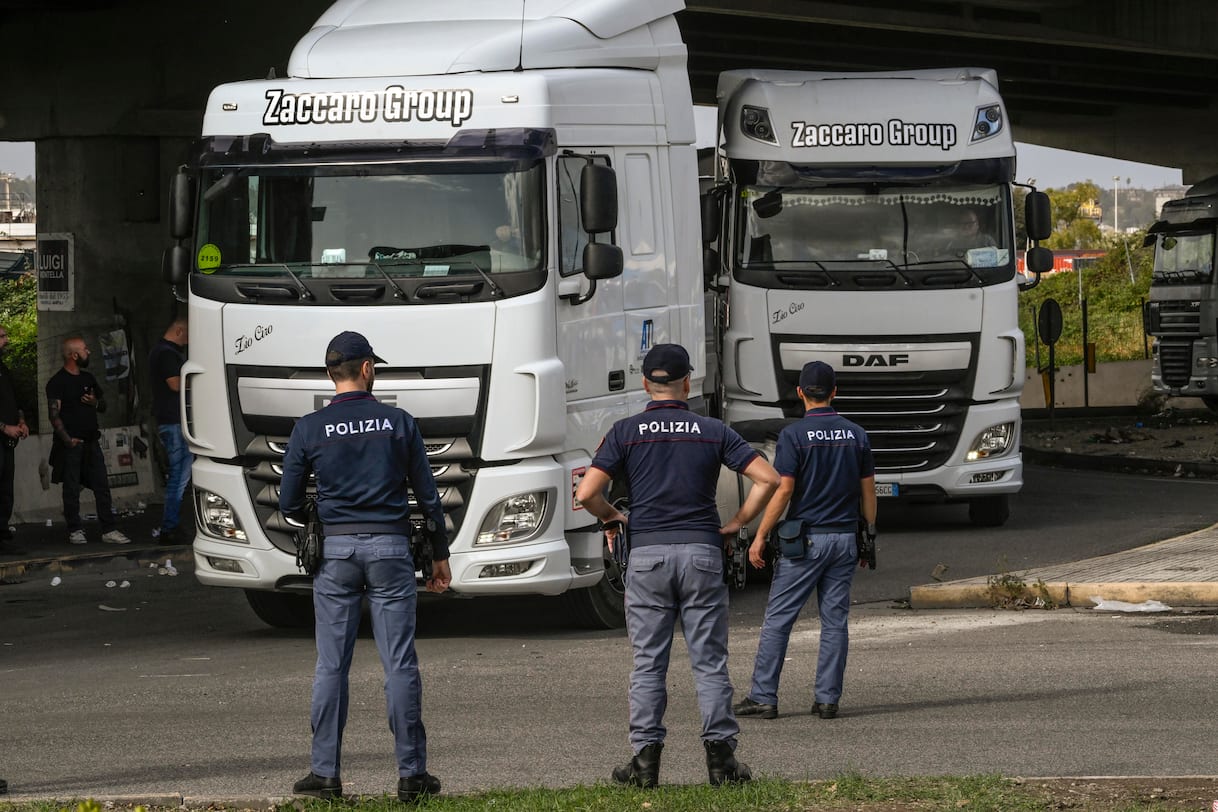
All blockades set up by hauliers and farmers on motorways in the Caserta and Salerno areas of Campania were taken down during the night, according to Sky TG24. The clearance came as the Consiglio dei ministri approved a €105 million support package aimed at offsetting the high cost of diesel, with funds directed to road haulage as well as agriculture and fishing. The Garante has meanwhile called for workers to be formally requisitioned, Sky TG24 reports.
Why it matters
The standoff over fuel prices has become a test of how the government handles widespread economic distress among working groups that are not traditional protest movements. The aid package is the executive's first concrete financial response to the price surge, while the threat of requisition signals a harder line against blockades that disrupt roads and supply chains. According to Sky TG24, the protest has already largely stood down in several other regions, including Calabria, Puglia and Basilicata.
Investigations and a widening security debate
The Procura di Napoli is looking into suspected mafia infiltration connected to the protests, according to Sky TG24. That inquiry adds a judicial dimension to a dispute that had until now centred on fuel costs.
Attention is also shifting to public order. Sky TG24 reports that 500 paratroopers are being sent to Milan, amid friction inside the government over the rules governing their deployment. Transport minister Salvini said the personnel could operate with drones and Lince vehicles, while defence minister Crosetto complained about the inability to use pepper spray and tasers and criticised what he described as attacks from those who see the troops as competition. Tension is rising ahead of further demonstrations expected tomorrow, with concern about a possible convergence with antagonist movements, and President Mattarella has signed the new security decree.
Sky TG24 also set out how requisition works as an administrative instrument: it is an extraordinary measure through which the government can limit or cancel strikes or interruptions to certain services. It can be issued by the prime minister or by a minister and may lead to sanctions for those who disregard it, while those affected can challenge it before a judge.
Costs, warnings and political reaction
The squeeze from fuel prices is being felt well beyond the haulage sector. Rita Longobardi, general secretary of Uil Funzione Pubblica, said the scarcity and high cost of fuel, together with the rising cost of living, are putting millions of workers in serious difficulty, and that travel problems now add to general price increases. She argued the emergency should not fall again on those who work, and called on the government to widen the use of remote working across public administrations and in private healthcare and third-sector organisations wherever duties allow. Longobardi noted that in southern regions the fuel shortage has already led to bus routes being cut or cancelled because of supply difficulties, meaning public transport users also risk being unable to reach work reliably. She pointed to the pandemic as proof that work can be organised differently while maintaining service continuity, and asked the government to promote, through talks with unions, a national approach allowing maximum temporary use of agile and remote work and flexible hours.
Taxi drivers are preparing their own action. Loreno Bittarelli, president of itTaxi, wrote in an editorial in l'Economista that the sector has never given in to ideological protests but now faces an economic emergency it cannot absorb. With fares set by municipalities, operators cannot pass record petrol and diesel increases on to passengers, so the costs fall entirely on drivers whose margins have been wiped out, he wrote. He said the category will demonstrate on foot, off shift and without vehicles outside the Mef in Rome on Monday 26 October, aiming to make its voice heard without inconveniencing citizens. The demands put to the government are an extension of the "Gasolio Professionale" scheme, an extraordinary compensation fund and genuine incentives for the green transition. Without urgent answers, Bittarelli warned, there is a real risk the service stops because operating costs cannot be covered.
Angelo Bonelli, a deputy for Avs, speaking on Omnibus on La7, accused the Meloni government of responding to protests born of social and economic crisis with talk of intimidation and infiltration and with threats of requisition. He said he and Nicola Fratoianni had met protesting farmers and hauliers in Avellino, and that diesel which cost them 85 cents a litre less than a year ago now costs about €1.60. He also raised problems in agricultural supply chains, saying datterini tomatoes paid to producers at 60 cents a kilo are sold in supermarkets in Rome and Milan for up to €11, leaving farmers poorer while consumers pay very high prices. Bonelli added that major energy companies are posting huge profits, citing a 70% rise in Eni's net profit, and said the Advocate General of the European Union has clarified that taxing energy windfall profits is compatible with EU law. He asked why the government does not act, arguing that it uses taxpayers' money to cut excise duties instead of seeking an extraordinary contribution from those accumulating billion-euro profits, which he said could free resources to support households and businesses without taking them from other spending areas.
The next test comes with the demonstrations expected tomorrow and the taxi protest at the Mef on Monday, while the Naples inquiry and the deployment debate in Milan will show how far the government is prepared to go beyond financial relief.